Question: New INKEY List Oat Cleansing Balm: worth retrying after residue?
Balm cleanser fit · Deciding whether to retry a reformulated balm cleanser
New INKEY List Oat Cleansing Balm: worth retrying after residue?
The new INKEY List Oat Cleansing Balm may be worth retrying if you liked balm cleansing but disliked the old residue. The brand says it changed the rinse feel; that does not guarantee a bare-skin finish. For dry skin, judge comfort after rinsing. If you dislike any coated feeling, staying with a familiar cleanser is reasonable.
Rico AI editorial: Reviewed against the sources below. Updated 2026-11-02.

Question people ask
New INKEY List Oat Cleansing Balm: worth retrying after residue?
Direct answer
The new INKEY List Oat Cleansing Balm may be worth retrying if you liked balm cleansing but disliked the old residue. The brand says it changed the rinse feel; that does not guarantee a bare-skin finish. For dry skin, judge comfort after rinsing. If you dislike any coated feeling, staying with a familiar cleanser is reasonable.
Decision snapshot
What matters: You liked balm cleansing, but not the finish. Does the update change your decision?
Next move: Check this exact formula in Rico.
Next decision paths
- How to read a skincare ingredient list before buying
- Cleanser leaves skin tight? Check this before replacing it
- Is Cetaphil Gentle Skin Cleanser enough for light makeup on dry skin?
What usually happens
You liked balm cleansing, but not the finish. Does the update change your decision?
Rico move
Check this exact formula in Rico.
The short answer
You liked the idea of melting away the day, then spent the next minute wondering whether the cleanser was still on your face. A reformulation gives you a reason to look again, not an obligation to buy again. Our fit read: consider a cautious retry when residue was the only problem and you still want a balm. Pause if the old product caused irritation, or if you simply prefer a lighter cleansing format. This is a label-based cosmetic judgment. We have not tested either version on a panel or on your skin, and we do not have a matched old-versus-new trial that settles your preference.
What is actually in it
This guide covers the current US 150 ml Oat Cleansing Balm. We checked the complete official declaration on November 2, 2026. Compare it with your own tube: the same product name does not identify every version. Full ingredient declaration: Prunus Amygdalus Dulcis (Sweet Almond) Oil, PEG-20 Glyceryl Triisostearate, Avena Sativa (Oat) Kernel Oil, Cera Microcristallina, Helianthus Annuus (Sunflower) Seed Wax, Sorbitan Olivate, Polyglyceryl-10 Stearate, Polyglyceryl-6 Caprylate, Polyglyceryl-4 Caprate, Jojoba Esters, Phenoxyethanol, Aqua (Water), Hippophae Rhamnoides (Seaberry) Fruit Oil, Tocopherol, Polyglycerin-3, Acacia Decurrens (Early Green Wattle) Flower Wax, Helianthus Annuus (Sunflower) Seed Oil, Ascorbyl Palmitate.
Four label clues, without a rinse-off promise
Sweet almond oil is first, followed by PEG-20 Glyceryl Triisostearate and oat kernel oil. Read that as a starting point for comparing labels, not a score for how clean your face will feel. The brand’s formula-change explanation says oat kernel oil increased from 3% to 5% and sea buckthorn oil was added. Those are reported changes, not proof that more oat oil solves every texture complaint. For the rinse step, the brand describes adding water to turn the balm milky. That is the practical job to pay attention to: work water into the balm before rinsing it away. An ingredient list cannot show how you will experience that transition. Phenoxyethanol is a preservative, as described in the European Commission’s ingredient opinion. Its presence is part of the formula, not evidence that the product is harsh. We are not inferring its concentration from the label. There is no separate Parfum entry in this declaration, and the brand calls the product fragrance-free. Neither observation promises personal tolerance. We have not assigned a treatment role to this rinse-off cleanser or adopted the brand’s antibacterial marketing as advice for blemishes.
What changed—and what remains uncertain
The brand’s residue claim is linked to a consumer trial with 29 participants. That is useful context for the claim’s origin; the page does not give us a detailed head-to-head dataset against the old formula. We cannot tell you how many people who disliked the previous finish would prefer this one. A milky rinse is a process cue, not a laboratory result. Your decision is narrower: after using the directions, does the finish feel comfortable enough that you want to use it again? There is no need to talk yourself into a texture because the tube says it is improved.
The plant-derived and organic side
The declaration names almond, oat, sunflower and seaberry oils, alongside waxes and other formula ingredients. That botanical story does not establish organic certification; we have not verified one. The FDA explains that ingredient origin does not determine safety. Natural does not automatically mean gentle, and a synthetic-sounding name does not establish harshness. The brand also flags nut-derived ingredients. If you have a known ingredient allergy or have been told to avoid something on this label, do not use a routine texture test to decide whether that restriction matters. Get appropriate individual advice.
The holistic esthetician read
Give this cleanser one job in your actual evening. If you wear makeup and enjoy a balm, a measured retry can answer a useful question. If you already finish washing comfortably, a new formula does not create a missing step. A busy evening is also a poor time to introduce three products and then guess which one changed the feel of your skin. Notice the difference between disliking a soft finish and feeling burning or persistent irritation. The first is a preference you can honor; the second is a reason to stop. Do not scrub until a rich cleanser feels like a foaming one. The AAD recommends gentle fingertips and avoiding scrubbing. Our guide to cleanser-related tightness helps you examine the washing step before adding more products. This is AI-assisted editorial reasoning, not a licensed professional’s personal product test or endorsement.
Is it a fit for you?
Good signs: the previous issue was residue alone, you still like balm cleansing, and you can identify the new formula on the tube. Slow-down signs: you dislike any rich after-feel, you already have a cleanser you like, or you would need extra washing just to tolerate this one. Skip-for-now signs: a known avoid ingredient appears, this product caused a reaction before, or your skin is already persistently irritated. A reformulation is not permission to ignore those signals. Our ingredient-list guide explains why the complete label matters more than a highlighted oat ingredient.
If you choose to retry
Start with the AAD’s small-area product test: use a normal amount twice daily for seven to ten days; for a cleanser, rinse after the directed contact time. Stop if a reaction develops. This cannot diagnose allergy or guarantee facial tolerance. For normal use, follow the brand: massage a raspberry-sized amount onto dry skin, add warm water, then rinse. Keep the rest of the routine familiar so you can judge the change. Follow with your usual moisturizer if needed. A second cleanse is an option, not an automatic requirement or a way to force an uncomfortable product to work. If you keep wishing for a different finish, choosing another format is a valid outcome.
How Rico reads this label
Check the exact version against your skin profile and routine in Rico. We have not invented a product score or a residue prediction: a label read cannot measure your preferred rinse feel. Rico publishes this guide to introduce its own app. Check this product in Rico.
When to stop
Rico gives Skin Fit guidance, not diagnosis or treatment. Stop and see a licensed clinician for persistent burning, swelling, rash or worsening irritation.
Better-fit swap path
Choose the rinse feel you actually want.
Turn this guide into one product decision
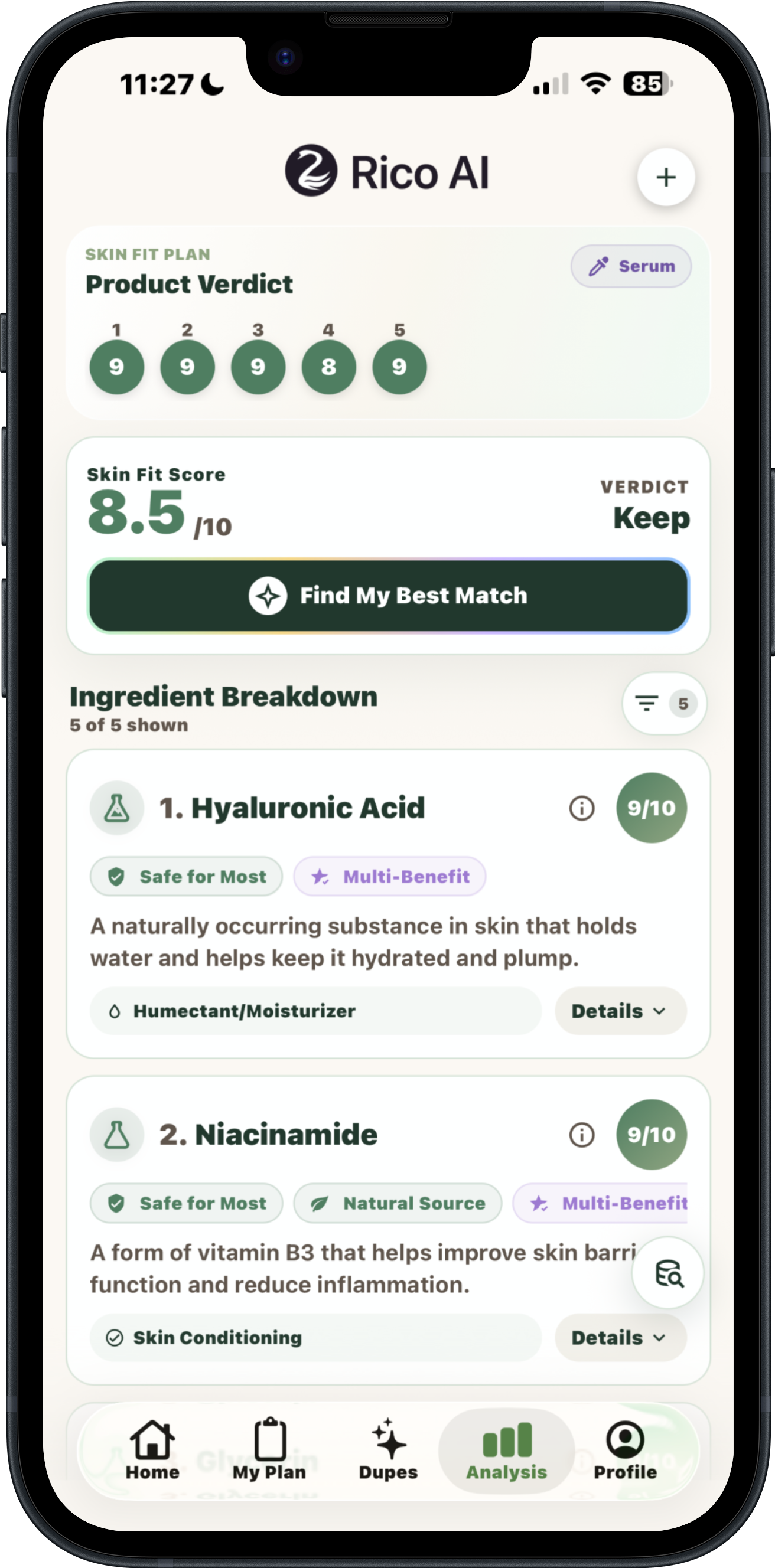
Free: Complete your first signed-in product check during onboarding and see Rico's plain-English Skin Fit result.
Sources and limits
These sources support the general guidance in this article. They cannot predict how one cosmetic will behave on your skin, and Rico does not diagnose or treat a skin condition.
- The INKEY List US: Oat Cleansing Balm 150 ml. Checked November 2, 2026. Current ordered declaration; new-formula explanation, rinse directions and 29-person consumer-claim footnote. Commercial manufacturer; no independent comparative test or personal tolerance guarantee.
- American Academy of Dermatology: Face washing 101. Checked November 2, 2026. Gentle fingertips, avoid scrubbing, moisturize dry skin. General professional education; not a balm trial.
- American Academy of Dermatology: How to test skin care products. Checked November 2, 2026. Small-area normal-amount testing twice daily for seven to ten days; rinse cleansers at directed contact time. Home testing is not diagnostic allergy testing or guaranteed facial tolerance.
- US FDA: Organic cosmetics. Checked November 2, 2026. Origin alone does not determine ingredient safety. Regulator education; does not certify this product.
A note from Zee, Rico AI founder
Skincare shopping gets loud fast. I built Rico to help you slow down, read the product in front of you, and choose one next step without turning every ingredient into a warning.
Quick answers
New INKEY List Oat Cleansing Balm: worth retrying after residue?
Consider a retry if residue was your only issue and you still like balm cleansing. The brand describes an improved rinse, but we cannot promise the finish you want.
How do I identify the new US formula?
Compare the full declaration on your tube with the current US brand page. The brand says oat kernel oil rose from 3% to 5% and sea buckthorn oil was added; the product name alone is not enough.
Does the new balm leave no residue for everyone?
We cannot establish that. The brand links its claim to a 29-person consumer trial; we do not have a detailed old-versus-new comparison that predicts your preference.
Do I need to double cleanse?
No automatic second cleanse is required. Follow the balm directions and judge your needs; do not add repeated washing just to force a texture you dislike to work.
Built for a calmer product decision
Rico is your skin clarity coach for everyday skincare decisions: read or scan the label, understand the formula in plain language, and decide whether to buy, apply, compare, or skip. Rico gives educational Skin Fit guidance, not medical diagnosis or treatment.
Check one ingredient list free Check this product in Rico