Question: If my cleanser leaves my skin tight after rinsing, should I replace it or check the label first?
Tight after cleansing · Before applying
Cleanser leaves skin tight? Check this before replacing it
Do not replace the whole routine after one tight-feeling wash. Start with what just happened: water temperature, rubbing, wash frequency, and the exact cleanser label. If tightness repeats without a stronger reaction, compare one gentler cleanser instead of changing the whole shelf.
Rico AI editorial: Reviewed against the sources below. Updated 2026-09-14.
Question people ask
If my cleanser leaves my skin tight after rinsing, should I replace it or check the label first?
Direct answer
Do not replace the whole routine after one tight-feeling wash. Start with what just happened: water temperature, rubbing, wash frequency, and the exact cleanser label. If tightness repeats without a stronger reaction, compare one gentler cleanser instead of changing the whole shelf.
Decision snapshot
What matters: The cleanser says gentle. Your skin still gets a vote.
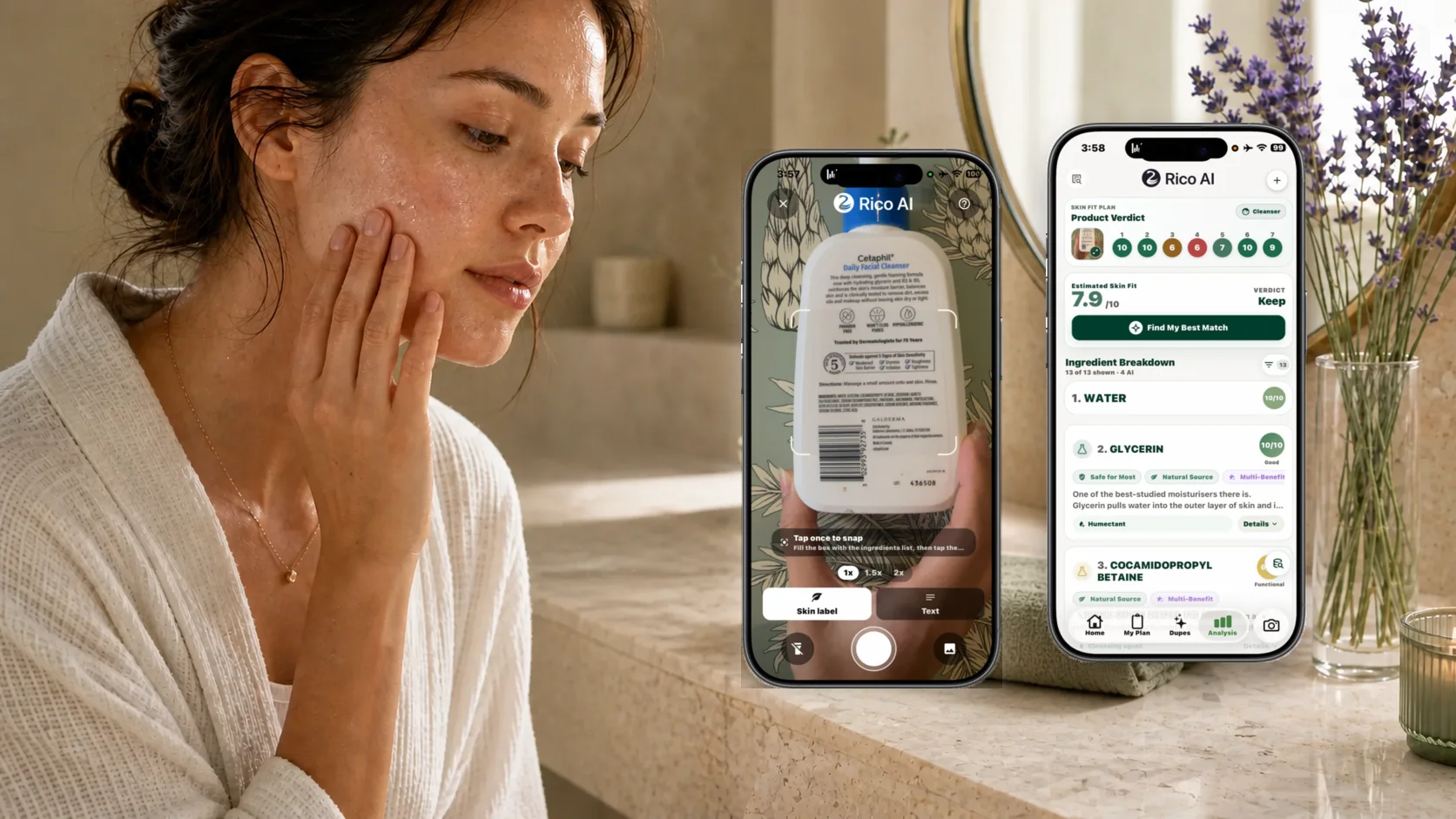
Next move: Before the next use, scan or paste the cleanser label in Rico. Check the cleanser type, directions, fragrance and active context, then decide whether to keep it or compare one option.
Best next guides
- Should I try PDRN skincare, or scan the label first?
- Will Anua Heartleaf Cleansing Oil break me out?
- Will TIRTIR Milk Skin Toner fit acne-prone or sensitive skin?
What usually happens
The cleanser says gentle. Your skin still gets a vote.
Rico move
Before the next use, scan or paste the cleanser label in Rico. Check the cleanser type, directions, fragrance and active context, then decide whether to keep it or compare one option.
Use the wash that already happened
Do not rewash just to run a test. Start with the wash that already happened: was the water hot, did you scrub, did you cleanse more often than usual, and what else touched your face? Tightness can point you toward the product or routine context, but it does not prove that the cleanser is unsafe, that your barrier is damaged, or that every product needs to go.
Treat tightness as a clue, not a verdict
Skin tightness after cleansing is a useful clue, but it does not identify one cause. DermNet explains cleanser and surfactant types in the context of dry or sensitive skin and over-washing. That makes the exact product and routine relevant before you decide what to replace.
Run one controlled cleanser check
Before the next normal use, scan the exact product touching your skin. Note whether it is a foaming cleanser, cream cleanser, cleansing oil, balm, exfoliating wash, or acne wash. Check the label directions and the rest of your routine, then keep the other variables steady. AAD face-washing guidance supports gentle, non-abrasive cleansing with lukewarm water and fingertips. If the same tight feeling repeats without a stronger reaction, compare one gentler cleanser rather than resetting the shelf.
Change one thing only if the signal repeats
A full routine reset makes the signal harder to read. Pull one cleanser forward, scan or paste that label, and compare it with what you already use. If tightness repeats and the cleanser looks difficult to repeat comfortably, compare one gentler option. If it does not repeat, keep observing instead of buying a replacement on one wash.
What Rico can do here
Rico is useful because this is a product-in-hand decision. Scan one skincare label. See if it fits your skin. Then choose calmly: keep the cleanser, use it more slowly, skip it, or compare one better-fit swap. Rico does not diagnose tightness, treat irritation, or guarantee that a scan prevents a future reaction.
Safety boundary
Stay in label-check mode, not medical certainty. FDA cosmetic-claims guidance and FTC health-products guidance are the claim ceiling for this article: no diagnosis, treatment, cure, prevention, universal safety, or guaranteed result. The AAD product-testing guide says to wash off and stop a product that causes a reaction. If you have a strong or persistent burning, red, itchy, swollen, or worsening reaction, seek help from a licensed clinician.
Better-fit swap path
If the same tight feeling repeats and the cleanser still looks like a poor fit, compare one gentler cleanser instead of changing everything at once.
Turn this guide into one product decision
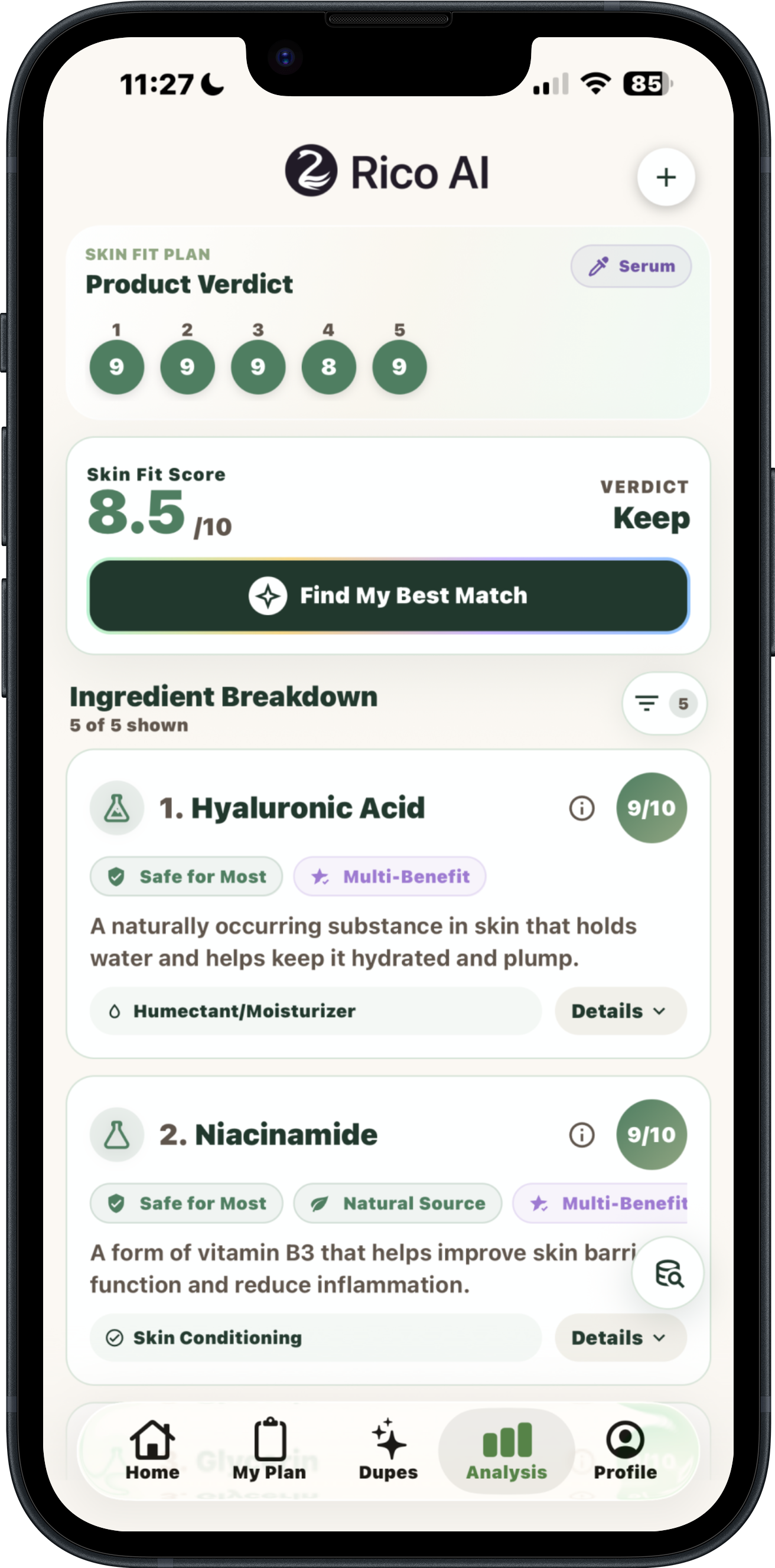
Free: Complete your first signed-in product check during onboarding and see Rico's plain-English Skin Fit result.
Sources and limits
These sources support the general guidance in this article. They cannot predict how one cosmetic will behave on your skin, and Rico does not diagnose or treat a skin condition.
- American Academy of Dermatology: Face washing 101. Supports gentle, non-abrasive cleansing with lukewarm water, limited washing, and moisturizer when skin feels dry or itchy; rechecked September 14, 2026.
- DermNet: Soaps and cleansers. Explains cleanser and surfactant types, plus why dry or sensitive skin and over-washing need product and routine context; rechecked September 14, 2026.
- American Academy of Dermatology: How to test skin care products. Gives dermatologist-reviewed steps for testing one new skin-care product before wider use and what to do after a reaction; rechecked September 14, 2026.
- U.S. Food and Drug Administration: Cosmetics labeling claims. Explains the difference between cosmetic claims and claims that make a product a drug; rechecked September 14, 2026.
A note from Zee, Rico AI founder
Skincare shopping gets loud fast. I built Rico to help you slow down, read the product in front of you, and choose one next step without turning every ingredient into a warning.
Quick answers
Does tight skin mean my cleanser damaged my skin barrier?
Not by itself. Tightness is a useful observation, but one sensation cannot diagnose barrier damage or prove that one ingredient caused it.
Should I wash again just to test the cleanser?
No. Use the wash that already happened. Note the water temperature, rubbing, wash frequency, and other products before deciding what to change.
What should I check before replacing my cleanser?
Check the product type, label directions, full ingredient list, fragrance and active context, plus whether you used hot water, scrubbed, or cleansed more often than usual.
When should I stop experimenting with a cleanser?
If a product causes a red, itchy, swollen, strongly burning, or worsening reaction, wash it off, stop using it, and seek help from a licensed clinician when needed.
Built for a calmer product decision
Rico is your skin clarity coach for everyday skincare decisions: read or scan the label, understand the formula in plain language, and decide whether to buy, apply, compare, or skip. Rico gives educational Skin Fit guidance, not medical diagnosis or treatment.
Scan the cleanser first Save the Skin Fit read