Question: How do I choose a barrier repair cream without making my routine too heavy?
Barrier cream guide · Routine repair
Barrier repair cream guide: how to choose one without overloading your routine
A good barrier-support product should help your skin feel supported without adding a pile of unnecessary irritants, strong actives, heavy layers, or textures your routine cannot repeat calmly.
Rico AI editorial: Reviewed against the sources below. Updated 2026-06-26.

Question people ask
How do I choose a barrier repair cream without making my routine too heavy?
Direct answer
A good barrier-support product should help your skin feel supported without adding a pile of unnecessary irritants, strong actives, heavy layers, or textures your routine cannot repeat calmly.
Decision snapshot
What matters: When your skin feels stressed, the instinct is to add more. The better move is often to remove friction.
Next move: Scan the barrier cream in Rico before you add it. Check whether the formula supports your routine or creates another heavy, fragranced, active, or hard-to-layer step.
Best next guides
- Should I try PDRN skincare, or scan the label first?
- Will Anua Heartleaf Cleansing Oil break me out?
- Will TIRTIR Milk Skin Toner fit acne-prone or sensitive skin?
What usually happens
When your skin feels stressed, the instinct is to add more. The better move is often to remove friction.
Rico move
Scan the barrier cream in Rico before you add it. Check whether the formula supports your routine or creates another heavy, fragranced, active, or hard-to-layer step.
Start with the calmest job of the cream
A barrier repair cream should make your routine calmer, not heavier. Before you buy, ask what job the product is supposed to do: add comfort, reduce the feeling of dryness, support your moisturizer step, or replace a routine that has become too active. When the job is clear, it is easier to read the ingredient list before buying. You are not chasing every popular barrier word at once. You are deciding whether this product belongs in your routine. If the product is only adding another complicated layer, scan the cream in Rico before it becomes another open jar on your shelf.
Scan the first product that could change your skin day
If your skin is acne-prone, scan the rich balm or moisturizer before it becomes your new daily layer. If your skin is sensitive, scan the product with fragrance, essential oils, exfoliating acids, or a long active stack before applying it to irritated skin. If your skin is dry or flaky, scan the cream you plan to use morning and night. If the front label says non-comedogenic but you still feel unsure, read what non-comedogenic actually means. If you are considering a heavier repair balm, use the Cicaplast acne-prone skin guide before you decide.
Look for support without overload
Barrier-support formulas often make sense when they focus on moisture, cushion, and fewer unnecessary irritants. Many ranking guides talk about ceramides, cholesterol, fatty acids, glycerin, hyaluronic acid, petrolatum, dimethicone, squalane, shea butter, niacinamide, or panthenol because these ingredient families can support hydration, softness, or a protective feel. If you want the deeper ingredient version, start with what ingredients help a damaged skin barrier. The fit still depends on the full formula. If the cream combines a rich texture, fragrance, multiple strong actives, and a long list of extras, it may be harder to layer calmly beside retinoids, exfoliants, vitamin C, or acne products. That is when ingredient compatibility matters more than a single hero ingredient.
Match the texture to your real skin day
The best barrier cream on paper can still be the wrong daily fit. Dry or tight skin may like more cushion. If you are acne-prone, a lighter finish may matter more, which is why the acne-prone moisturizer check is a useful next read. Sensitive skin may need fewer scent and active patterns, so the sensitive skin ingredient checks path can help you compare calmer formulas. If you only choose from the front label, every product sounds soothing. The ingredient list helps you see whether the formula matches how your skin actually behaves.
Know the signs your routine is asking for less
People usually search for barrier repair when their skin feels tight, dry, shiny but dehydrated, easily flushed, rough, stingy, or suddenly less tolerant of products that used to feel fine. Those signs do not prove one diagnosis, and Rico is not a medical tool. They do tell you the routine may need less friction. If every new serum burns, start with why sensitive skin can sting before adding another active. If moisturizer does not seem to last, or makeup and sunscreen sit strangely on top, scan before applying and simplify before layering more.
Pause the products that keep the cycle loud
A helpful barrier routine is usually boring in the best way. When your skin feels overloaded, be careful with stacking exfoliating acids, retinoids, strong vitamin C, drying cleansers, heavy fragrance, essential oils, peel pads, or too many new products at once. The point is not to fear every active forever. The point is to stop turning every skin problem into another product experiment. Even clean products can still break you out if the formula is too rich, fragranced, or active for you. And because reviews are not enough, a barrier cream works better when the rest of the routine gives it room to do its job.
Build a short repair routine first
A simple barrier-support routine usually starts with a gentle cleanse, a moisturizer or repair cream that matches your skin feel, and sunscreen during the day. If sunscreen is part of the problem, use the sunscreen breakout check before you replace everything. If your skin is very dry, applying moisturizer while the skin is slightly damp can help the product feel more comfortable. If you are shopping for the routine online, scan products before buying so you do not add three new guesses at once.
Do not expect one cream to fix a crowded routine
Barrier repair content often makes the cream sound like the hero, but the cream is only one part of the decision. A strong formula can still struggle if you keep layering products that dry, sting, peel, or conflict with each other. That is where Rico on the App Store can help. Rico does not just ask whether a moisturizer sounds good. It helps you read the formula beside your concern and routine so you can see whether the product is support, noise, or a better-fit swap moment. If you are comparing scanners, the best skincare scanner app comparison explains the difference between a generic score and Skin Fit guidance.
Compare similar creams by formula role
When two barrier creams both say repair, compare their actual routine role. One may be a rich night cream. One may be a lightweight daily moisturizer. One may rely on occlusives for a protective feel. Another may focus on humectants and ceramides. If you are choosing between familiar products, use the moisturizer comparison guide as a model for comparing formula role instead of brand name. The better choice is the one that solves the problem you have without creating a new one. If neither product fits, find a better-fit swap before you spend again.
Use it slowly before adding more
When your skin feels stressed, the instinct is to buy another fix. A calmer move is to test one supportive product, keep the rest of the routine simple, and watch whether your skin can repeat it. If you are in a store or on a product page, check products before checkout instead of adding another impulse buy. Rico is useful here because it turns the label into a plain-language fit read before the product becomes another open jar on your shelf. If the first few uses feel uncomfortable, use Rico for one scan, step back, simplify, and compare the formula against a calmer option.
When to choose a simpler swap
Choose a simpler swap when the cream looks too fragranced, too active, too heavy, or too hard to layer with what you already use. The better option is not always the trendiest barrier cream. It is the product that does the same routine job with less friction for your skin. If the label makes you feel like you need a glossary, a routine reset, and three more products to tolerate it, go to better-fit Matches instead of forcing it. A strong barrier product should make your next step clearer. If you are still unsure, return to the scan before you buy path and check the exact formula.
Better-fit swap path
Choose a simpler barrier-support product when the cream looks overloaded or does not fit the way your skin already behaves.
Turn this guide into one product decision
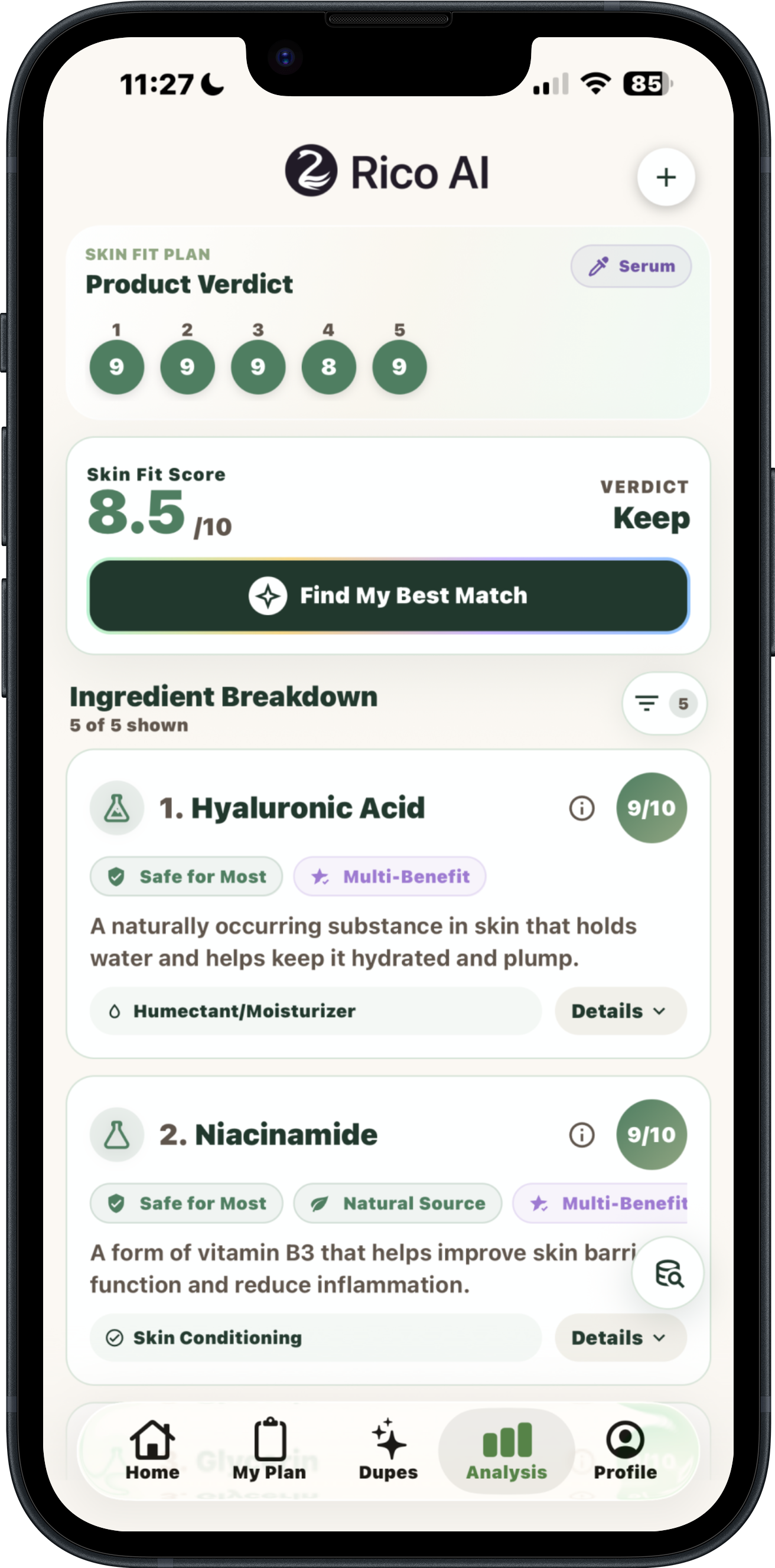
Free: Complete your first signed-in product check during onboarding and see Rico's plain-English Skin Fit result.
Sources and limits
These sources support the general guidance in this article. They cannot predict how one cosmetic will behave on your skin, and Rico does not diagnose or treat a skin condition.
- American Academy of Dermatology: Moisturizer and acne-prone skin. Explains why moisturizer can matter in acne routines and how to read acne-friendly label language.
- American Academy of Dermatology: Acne skin-care tips. Offers dermatologist-reviewed guidance on gentle routines, sunscreen, and avoiding irritation.
- American Academy of Dermatology: Moisturizer and barrier support. Provides dermatologist-reviewed context for gentle, fragrance-free moisturizer use on dry, reactive skin.
A note from Zee, Rico AI founder
Skincare shopping gets loud fast. I built Rico to help you slow down, read the product in front of you, and choose one next step without turning every ingredient into a warning.
Quick answers
How do I choose a barrier repair cream without making my routine too heavy?
A good barrier-support product should help your skin feel supported without adding a pile of unnecessary irritants, strong actives, heavy layers, or textures your routine cannot repeat calmly.
What should I do before buying this product?
Scan the barrier cream in Rico before you add it. Check whether the formula supports your routine or creates another heavy, fragranced, active, or hard-to-layer step.
What if this product does not look like a good fit?
Choose a simpler barrier-support product when the cream looks overloaded or does not fit the way your skin already behaves.
Built for a calmer product decision
Rico is your skin clarity coach for everyday skincare decisions: read or scan the label, understand the formula in plain language, and decide whether to buy, apply, compare, or skip. Rico gives educational Skin Fit guidance, not medical diagnosis or treatment.
Check one ingredient list free Get Rico for iPhone