Question: How do I choose sunscreen for dark spots without breaking out or looking ashy?
Choose one SPF · Before checkout
Dark spots + acne-prone skin? Choose sunscreen in this order
Start with the Drug Facts basics: broad-spectrum SPF 30 or higher, plus water resistance when you need it. Then choose the tint, finish, and acne-prone label clues that make the sunscreen realistic to wear and reapply.
Rico AI editorial: Reviewed against the sources below. Updated 2026-09-21.

Question people ask
How do I choose sunscreen for dark spots without breaking out or looking ashy?
Direct answer
Start with the Drug Facts basics: broad-spectrum SPF 30 or higher, plus water resistance when you need it. Then choose the tint, finish, and acne-prone label clues that make the sunscreen realistic to wear and reapply.
Decision snapshot
What matters: You want to protect dark spots, but the last SPF looked gray, felt greasy, or seemed to arrive beside a new breakout. Another random bottle does not answer which part of the choice went wrong.
Next move: Use Rico for one narrow job: read the exact ingredient list, fragrance listing, product role, and routine overlap. Rico cannot verify the labeled SPF test, prove visible-light protection from an unlabeled tint, or predict whether your skin will break out.
Next decision paths
- How do I check if a sunscreen will break me out?
- Sunscreen pilling under makeup? Change one step before you buy
- What does non-comedogenic actually mean?
What usually happens
You want to protect dark spots, but the last SPF looked gray, felt greasy, or seemed to arrive beside a new breakout. Another random bottle does not answer which part of the choice went wrong.
Rico move
Use Rico for one narrow job: read the exact ingredient list, fragrance listing, product role, and routine overlap. Rico cannot verify the labeled SPF test, prove visible-light protection from an unlabeled tint, or predict whether your skin will break out.
Choose in this order
First verify the protection words on the Drug Facts label. Second decide whether tint and shade match make sense for the dark spots you are trying not to deepen. Third check acne-prone clues and the full formula. Last, judge the finish in your real morning routine. This order keeps one scary ingredient, one glowing review, or one “invisible” promise from making the whole decision.
1. Verify the protection label
Start with broad-spectrum SPF 30 or higher. If you will sweat or swim, look for water resistance and follow the time shown on the label. The FDA sunscreen guide explains what SPF, broad spectrum, water resistance, and the Drug Facts directions mean. Rico can read the formula beside that label; it cannot independently certify those performance claims.
2. Treat tint as a real fit decision
The American Academy of Dermatology recommends tinted sunscreen with iron oxide for people working on dark spots because visible light can worsen hyperpigmentation. That does not mean every tint works for every face. A shade that turns gray, orange, or obvious may make you use less or stop. Compare the tint on your skin in daylight, then keep the protection label as the non-negotiable baseline.
3. Use acne-prone words as clues, not promises
Non-comedogenic or oil-free wording can narrow the shelf, but it cannot guarantee that your skin will not break out. Read what non-comedogenic actually means, then compare the whole ingredient list, fragrance listing, and texture. Test one sunscreen while keeping the rest of the routine steady. That gives you a clearer signal than replacing sunscreen, moisturizer, primer, and cleanser together.
4. Check the formula, then test the wear
Rico can translate the exact ingredient list, flag formula and routine context worth reviewing, and keep one product decision readable. It cannot tell from ingredients alone whether the tested SPF claim is accurate, whether a tint contains enough iron oxide for a specific outcome, whether the shade matches you, or whether you will break out. After the label check, try the sunscreen as directed and change one variable at a time. If it pills under makeup, use the SPF layering guide before replacing every layer.
The one-product decision
Take the exact sunscreen in your hand through four checks: broad-spectrum SPF 30 or higher, water resistance if needed, tint and shade match if dark spots are the concern, and formula or texture clues you can live with. If it clears those checks, test that one bottle instead of rebuilding the routine. Stop after a strong or worsening reaction. Ask a licensed clinician about persistent irritation or a spot that is new, changing, painful, or concerning. Rico provides label and product-decision support, not diagnosis, treatment, or a guarantee of protection or skin response.
Better-fit swap path
If cast or texture makes you skip the product, compare one shade-matched tinted or lighter option while keeping the broad-spectrum SPF 30 baseline. Change one sunscreen, not the whole routine.
Turn this guide into one product decision
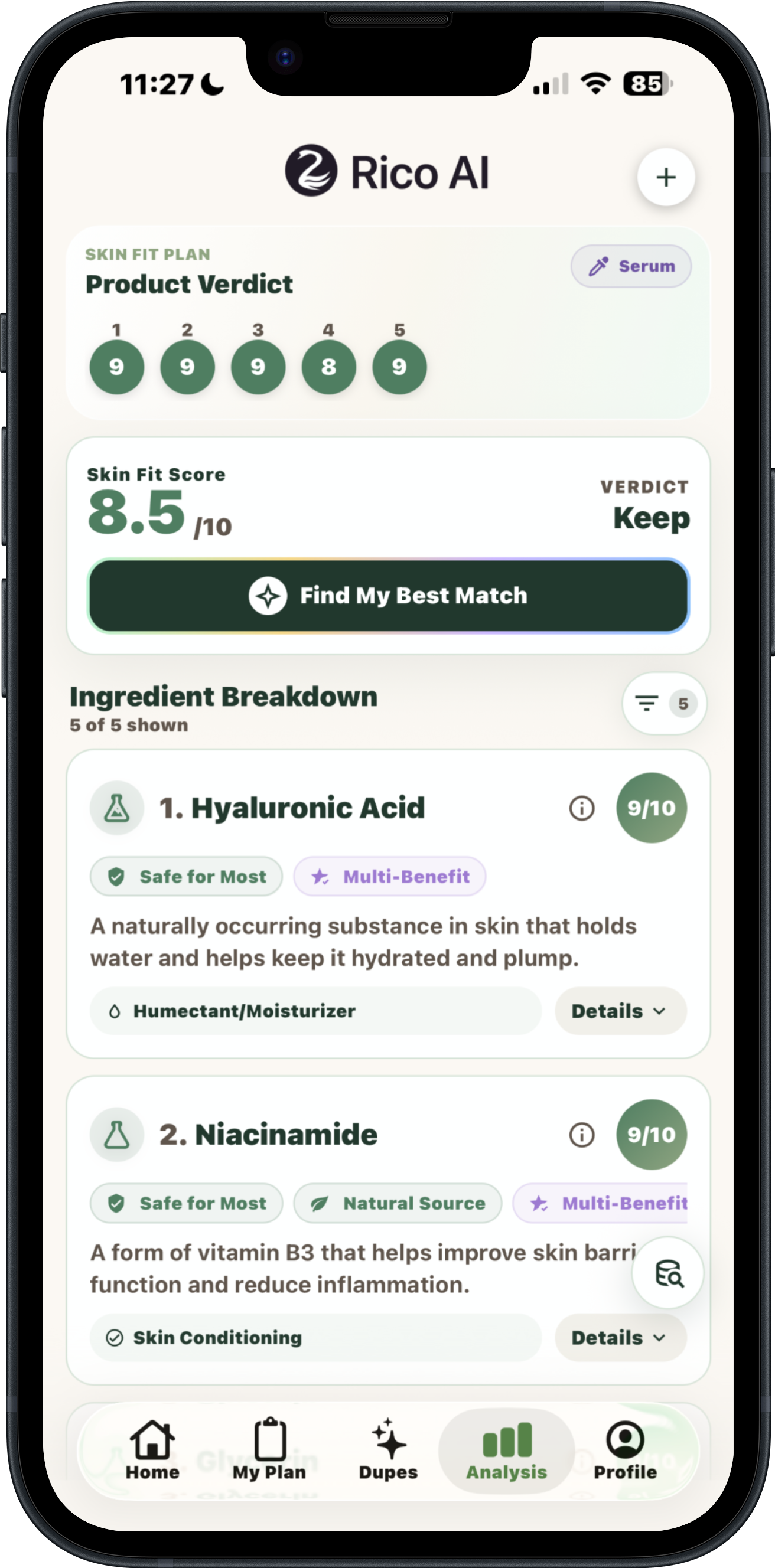
Free: Complete your first signed-in product check during onboarding and see Rico's plain-English Skin Fit result.
Sources and limits
These sources support the general guidance in this article. They cannot predict how one cosmetic will behave on your skin, and Rico does not diagnose or treat a skin condition.
- American Academy of Dermatology: How to choose a sunscreen. Covers broad-spectrum SPF 30 or higher, water resistance, acne-prone label clues, and tinted sunscreen for darker skin tones; rechecked September 21, 2026.
- U.S. Food and Drug Administration: Sunscreen: how to help protect your skin from the sun. Explains the Drug Facts label, broad-spectrum labeling, SPF, water resistance, and use directions; rechecked September 21, 2026.
- American Academy of Dermatology: How to fade dark spots in darker skin tones. Explains common causes of hyperpigmentation, the role of irritation, and why tinted sunscreen with iron oxide can matter; rechecked September 21, 2026.
- Skin of Color Society: Sunscreen selection. Supports broad-spectrum water-resistant SPF 30 or higher, tinted iron-oxide options for visible light, non-comedogenic or oil-free clues for acne-prone skin, and texture preference; rechecked September 21, 2026.
A note from Zee, Rico AI founder
Skincare shopping gets loud fast. I built Rico to help you slow down, read the product in front of you, and choose one next step without turning every ingredient into a warning.
Quick answers
Do I need a tinted sunscreen for dark spots?
AAD guidance recommends tinted sunscreen with iron oxide when dark spots are a concern because visible light can worsen hyperpigmentation. The tint still needs to match your skin well enough that you will use the labeled amount and reapply it.
Does non-comedogenic mean a sunscreen cannot break me out?
No. Non-comedogenic or oil-free wording is a useful acne-prone clue, not a personal guarantee. Test one sunscreen at a time and keep the rest of the routine steady enough to read what happens.
Can Rico tell whether a sunscreen really delivers its labeled SPF?
No. Rico can help read the exact ingredient list and routine context. It cannot reproduce the product testing behind SPF or broad-spectrum claims, verify an unlabeled iron-oxide amount, or predict your skin response.
When should I stop using a sunscreen?
Stop and wash it off if you develop a strong or worsening reaction. Get help from a licensed clinician for a persistent or severe reaction, or for a dark spot that is new, changing, painful, or concerning.
Built for a calmer product decision
Rico is your skin clarity coach for everyday skincare decisions: read or scan the label, understand the formula in plain language, and decide whether to buy, apply, compare, or skip. Rico gives educational Skin Fit guidance, not medical diagnosis or treatment.
Check one SPF label Keep the decision in Rico