Question: If a skincare product says non-comedogenic, can it still break me out?
Non-comedogenic label · Label claim doubt
What does non-comedogenic actually mean?
Yes, it can. Non-comedogenic means the product is intended to be unlikely to cause acne. It is a useful clue, not a promise about how every person will respond.
Rico AI editorial: Reviewed against the sources below. Updated 2026-09-03.
Question people ask
If a skincare product says non-comedogenic, can it still break me out?
Direct answer
Yes, it can. Non-comedogenic means the product is intended to be unlikely to cause acne. It is a useful clue, not a promise about how every person will respond.
Decision snapshot
What matters: You see small bumps, turn the bottle around, and wonder why the front claim did not settle the choice.
Next move: Check the current full label and the product’s job before you buy or apply it. Rico can turn that exact label into plain Skin Fit context, then you decide whether to keep it, skip it, or compare one match.
Next decision paths
- Moisturizer feels heavy on acne-prone skin? Check these 4 things
- Cleanser leaves skin tight? Check this before replacing it
- How do I find a cheaper skincare match that still fits my skin?
What usually happens
You see small bumps, turn the bottle around, and wonder why the front claim did not settle the choice.
Rico move
Check the current full label and the product’s job before you buy or apply it. Rico can turn that exact label into plain Skin Fit context, then you decide whether to keep it, skip it, or compare one match.
Start with the bottle in your hand
You are holding a cleanser that says won’t clog pores. You can also see small bumps on your chin. The front claim helps, but it cannot finish the decision for you. Check the exact label, the product job, and the rest of your routine before you buy or replace anything.
What non-comedogenic can tell you
The American Academy of Dermatology explains that oil-free, non-comedogenic, and won’t-clog-pores wording means a moisturizer is unlikely to cause acne. That makes the phrase a useful shopping clue. It does not make the product a guarantee for every face.
What the current Cetaphil label says
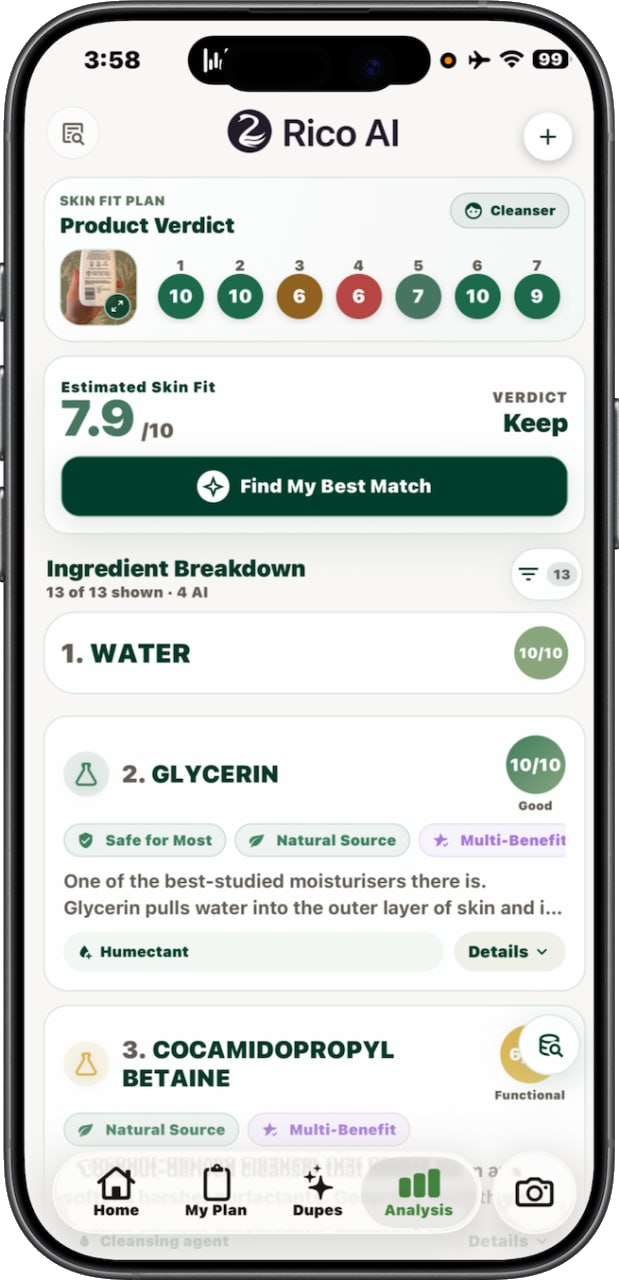
As of September 3, 2026, the official Cetaphil Daily Facial Cleanser page lists “Won’t clog pores” and “Hypoallergenic.” It also lists this full ingredient declaration: Water, Glycerin, Cocamidopropyl Betaine, Disodium Laureth Sulfosuccinate, Sodium Cocoamphoacetate, Panthenol, Niacinamide, Pantolactone, Acrylates/C10-30 Alkyl Acrylate Crosspolymer, Sodium Benzoate, Masking Fragrance, Sodium Chloride, and Citric Acid. This is current product truth, not a promise of an individual result.
Hypoallergenic is also a clue, not a promise
The FDA hypoallergenic Q&A says there is no federal cosmetic standard or definition for the term. The FDA allergen guide tells shoppers to read the ingredient panel instead of relying on words like hypoallergenic alone.
Use the full label for one calm decision
Look at the exact product role, directions, current full list, and how the product fits beside what you already use. If you are comparing moisturizers, use the two-moisturizer guide. If the price is the problem, use the better-fit match guide instead of trusting a dupe name.
What Rico can answer safely
Rico can scan the exact label and show estimated Skin Fit and plain-language ingredient context. You still make the decision. The scan is not an allergy test, acne diagnosis, or guarantee that the product will never cause a breakout.
Safety boundary
Do not use a label claim or an app result to diagnose, treat, cure, or prevent acne or another condition. Stop using a product that causes a strong or lasting reaction, and ask a licensed clinician about persistent acne, swelling, rash, infection signs, or severe irritation.
Better-fit swap path
If the claim is the only reason to buy, pause. Compare one product that does the same job and makes more sense for your routine, texture preference, and budget.
Turn this guide into one product decision
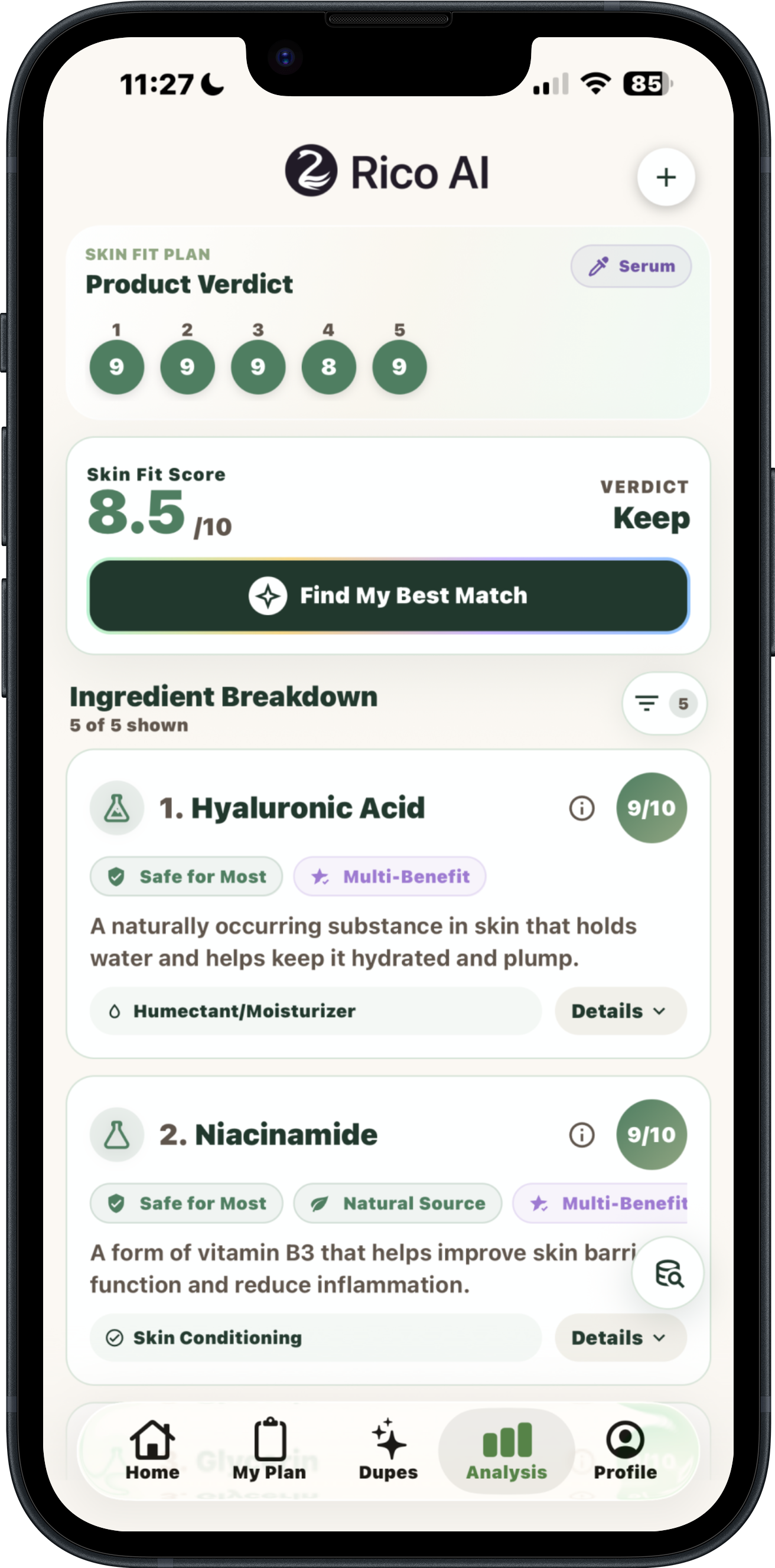
Free: Complete your first signed-in product check during onboarding and see Rico's plain-English Skin Fit result.
Sources and limits
These sources support the general guidance in this article. They cannot predict how one cosmetic will behave on your skin, and Rico does not diagnose or treat a skin condition.
- American Academy of Dermatology: Moisturizer and acne-prone skin. Explains why moisturizer can matter in acne routines and how to read acne-friendly label language.
- U.S. Food and Drug Administration: Cosmetics Safety Q&A: Hypoallergenic. Explains that hypoallergenic has no federal cosmetic standard or definition and is not a guarantee.
- U.S. Food and Drug Administration: Allergens in cosmetics. Advises reading the ingredient panel instead of relying on front-label terms alone.
- U.S. Food and Drug Administration: Cosmetics labeling claims. Explains the difference between cosmetic claims and claims that make a product a drug; rechecked September 14, 2026.
A note from Zee, Rico AI founder
Skincare shopping gets loud fast. I built Rico to help you slow down, read the product in front of you, and choose one next step without turning every ingredient into a warning.
Quick answers
Can a non-comedogenic product still break me out?
Yes. The wording means the product is intended to be unlikely to cause acne. It does not guarantee the same result for every person or routine.
Does hypoallergenic mean a product cannot cause a reaction?
No. The FDA says hypoallergenic has no federal cosmetic standard or definition. Read the current ingredient panel and do not treat the word as a promise.
What should I check after the front label?
Check the exact product job, current full ingredient list, directions, and how it fits beside the rest of your routine.
Built for a calmer product decision
Rico is your skin clarity coach for everyday skincare decisions: read or scan the label, understand the formula in plain language, and decide whether to buy, apply, compare, or skip. Rico gives educational Skin Fit guidance, not medical diagnosis or treatment.
Check the full formula Get Rico to scan one label