Question: If my moisturizer feels heavy but my skin is dry and acne-prone, should I replace it?
Heavy-feeling moisturizer · After first use
Moisturizer feels heavy on acne-prone skin? Check these 4 things
Do not replace it just because “heavy” sounds bad. First check the product job, the amount and directions, the exact label, and what else is already in your routine. If the heavy feel keeps bothering you or a strong or lasting reaction appears, stop and compare one simpler moisturizer. A label can guide your next choice; it cannot prove what caused a breakout.
Rico AI editorial: Reviewed against the sources below. Updated 2026-09-28.
Question people ask
If my moisturizer feels heavy but my skin is dry and acne-prone, should I replace it?
Direct answer
Do not replace it just because “heavy” sounds bad. First check the product job, the amount and directions, the exact label, and what else is already in your routine. If the heavy feel keeps bothering you or a strong or lasting reaction appears, stop and compare one simpler moisturizer. A label can guide your next choice; it cannot prove what caused a breakout.
Decision snapshot
What matters: Your skin feels dry, but the moisturizer sits heavily on top. You want relief without turning one uncomfortable night into a full routine reset.
Next move: Check four things in order: the job the moisturizer is meant to do, the amount and directions, the full label, and the other products already in your routine. Rico can organize the exact label; then keep or compare one moisturizer—not the whole shelf.
Next decision paths
- What does non-comedogenic actually mean?
- How do I find a cheaper skincare match that still fits my skin?
- Cleanser leaves skin tight? Check this before replacing it
What usually happens
Your skin feels dry, but the moisturizer sits heavily on top. You want relief without turning one uncomfortable night into a full routine reset.
Rico move
Check four things in order: the job the moisturizer is meant to do, the amount and directions, the full label, and the other products already in your routine. Rico can organize the exact label; then keep or compare one moisturizer—not the whole shelf.
Start with the decision, not the fear
A heavy feel does not automatically make a moisturizer wrong for acne-prone skin. It means you have one real observation to check. Before you replace the jar, look at what job it is doing, how much you used, what the directions say, and what else is layered underneath or on top.
1. Check the product job
Dry acne-prone skin can still need moisture. The American Academy of Dermatology explains that moisturizer can help when acne treatments leave skin dry. Ask whether your jar is meant to give light daytime moisture, richer overnight comfort, or support beside a drying routine step. “Heavy” may simply mean the product job does not match this moment.
2. Check the amount and directions
More product is not always more comfort. Use the amount and timing on the label, then notice whether the heavy feel changes. Do not add several new products at once. That makes it harder to tell which step changed the routine.
3. Read the whole label
Oil-free, non-comedogenic, and won’t-clog-pores wording can help you narrow the shelf, according to the AAD. Treat those words as clues, not a promise about your skin. Read what non-comedogenic really means, then keep the complete formula and product directions in view.
4. Check the rest of the routine
A moisturizer does not sit alone. Sunscreen, treatment layers, oils, and makeup can change how the stack feels. Keep the routine steady while you judge this one step. If the same heavy feel keeps bothering you, compare one simpler option that does the same job.
Compare one new jar at a time
Choose one comparison so you can see what changed. The AAD product-testing guide gives a small-area method for testing a new skin-care product before wider use.
Let Rico organize the label
Scan or paste the exact ingredient list in Rico, then read the formula and Skin Fit context beside the routine you already use. Rico can organize the label. It cannot feel the texture on your skin, prove what caused a breakout, or predict your next reaction. You make the final keep-or-compare choice.
Safety boundary
This is cosmetic decision support, not acne diagnosis or treatment. A heavy feel or label check cannot prove what caused acne or promise that a moisturizer will prevent breakouts. Stop using a product that causes a strong or lasting reaction, and ask a licensed clinician about persistent acne, swelling, rash, infection signs, or severe irritation.
Better-fit swap path
If the same heavy feel keeps bothering you, compare one simpler or lighter-feeling option that does the same routine job. Change one product at a time so the next decision stays readable.
Turn this guide into one product decision
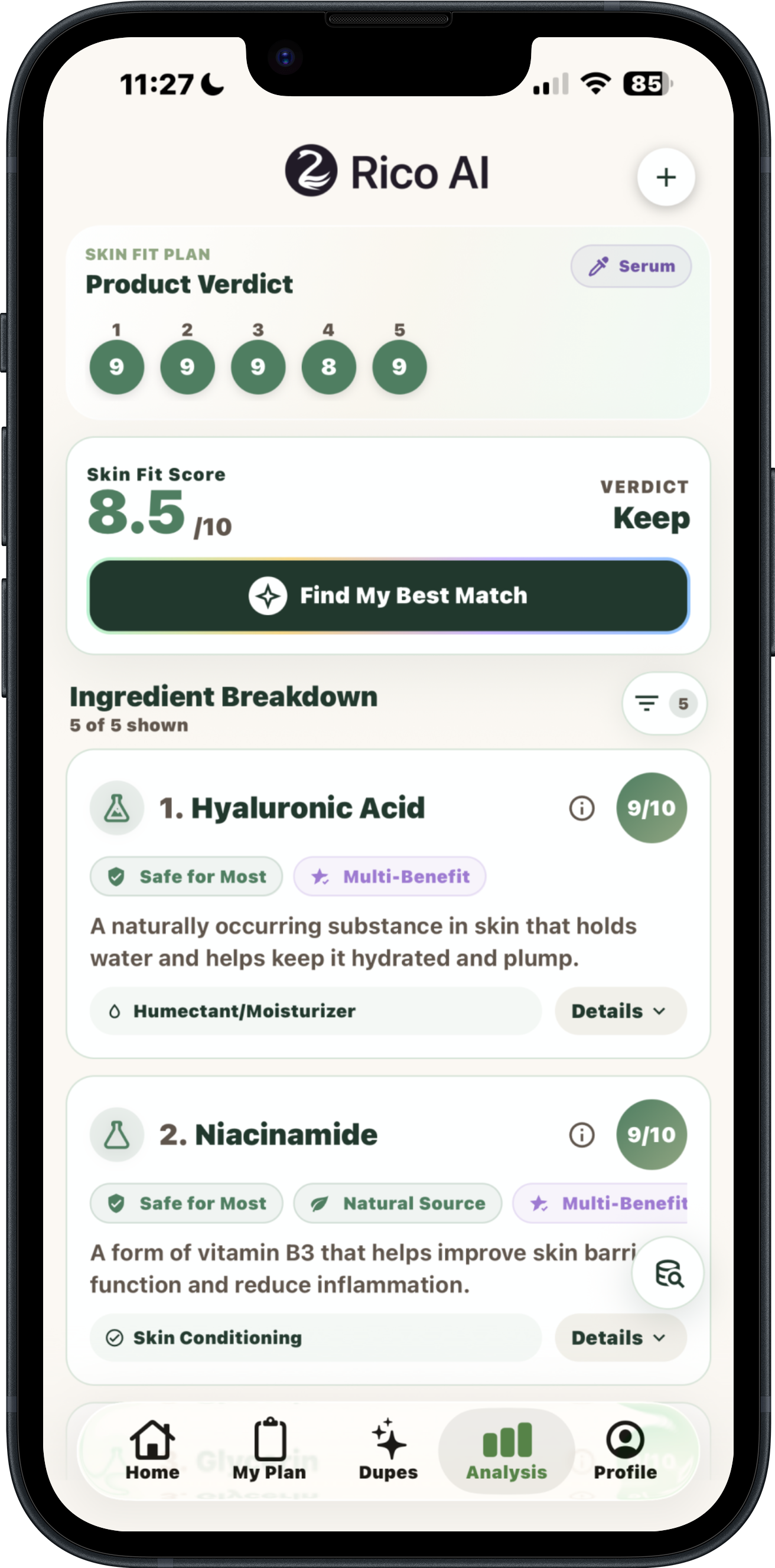
Free: Complete your first signed-in product check during onboarding and see Rico's plain-English Skin Fit result.
Sources and limits
These sources support the general guidance in this article. They cannot predict how one cosmetic will behave on your skin, and Rico does not diagnose or treat a skin condition.
- American Academy of Dermatology: Moisturizer and acne-prone skin. Explains why moisturizer can matter in acne routines and how to read acne-friendly label language.
- American Academy of Dermatology: How to test skin care products. Gives dermatologist-reviewed steps for testing one new skin-care product before wider use and what to do after a reaction; rechecked September 14, 2026.
- U.S. Food and Drug Administration: Cosmetics labeling claims. Explains the difference between cosmetic claims and claims that make a product a drug; rechecked September 14, 2026.
- Federal Trade Commission: Health Products Compliance Guidance. Sets truthfulness and substantiation expectations for health-related product benefit and safety claims; rechecked September 14, 2026.
A note from Zee, Rico AI founder
Skincare shopping gets loud fast. I built Rico to help you slow down, read the product in front of you, and choose one next step without turning every ingredient into a warning.
Quick answers
Does a heavy-feeling moisturizer mean it will clog my pores?
No. How a moisturizer feels is one useful observation, but it cannot prove that the product will clog pores or cause a breakout. Check the whole product and how it fits your routine.
What label clues can help acne-prone skin?
Oil-free, non-comedogenic, and won’t-clog-pores wording can be useful clues. They are not a personal guarantee, so keep the product job, directions, and full formula in view.
How should I compare a lighter moisturizer?
Compare one product that does the same routine job, follow its directions, and test it before wider use. If you get a strong or lasting reaction, stop and ask a licensed clinician for help.
Built for a calmer product decision
Rico is your skin clarity coach for everyday skincare decisions: read or scan the label, understand the formula in plain language, and decide whether to buy, apply, compare, or skip. Rico gives educational Skin Fit guidance, not medical diagnosis or treatment.
Check one moisturizer label Save the Skin Fit read