Question: Is Lightsaver Triplesome Serum SPF 40 a good fit for acne-prone or sensitive skin?
Tinted sunscreen fit · Before buying a tinted sunscreen
Is Lightsaver Triplesome Serum SPF 40 a good fit for acne-prone or sensitive skin?
Is Lightsaver Triplesome Serum SPF 40 a good fit for acne-prone or sensitive skin? Possibly: this tinted mineral formula is fragrance-free, but we found no non-comedogenic claim. Acne-prone skin needs a full-formula check; sensitive skin needs a tolerance test. Choose it only if its shade and glow suit you. Use another, water-resistant sunscreen for swimming or sweating.
Rico AI editorial: Reviewed against the sources below. Updated 2026-10-14.

Question people ask
Is Lightsaver Triplesome Serum SPF 40 a good fit for acne-prone or sensitive skin?
Direct answer
Is Lightsaver Triplesome Serum SPF 40 a good fit for acne-prone or sensitive skin? Possibly: this tinted mineral formula is fragrance-free, but we found no non-comedogenic claim. Acne-prone skin needs a full-formula check; sensitive skin needs a tolerance test. Choose it only if its shade and glow suit you. Use another, water-resistant sunscreen for swimming or sweating.
Decision snapshot
What matters: You want a tinted sunscreen that feels comfortable every morning, but a radiant finish and a sensitive-skin label cannot tell you how this bottle will feel on your face.
Next move: Check this exact Lightsaver product in Rico. Read the complete formula beside your routine, then judge its shade and finish on your own skin.
Next decision paths
- How do I check if a sunscreen will break me out?
- What does non-comedogenic actually mean?
- Sunscreen pilling under makeup? Change one step before you buy
What usually happens
You want a tinted sunscreen that feels comfortable every morning, but a radiant finish and a sensitive-skin label cannot tell you how this bottle will feel on your face.
Rico move
Check this exact Lightsaver product in Rico. Read the complete formula beside your routine, then judge its shade and finish on your own skin.
The short answer
The Tinted US version is worth considering when you want a radiant finish and its shade works at the amount you need to apply. A dry-feeling routine may welcome that finish; someone who wants a matte face may find the glow distracting. These are shopping considerations, not a promise of comfort. Start with the official product label, then compare it with the tube you buy. This review covers Tinted, 40 ml, checked October 14, 2026; it does not substitute the Ivory or SPF 33 formula.
What is actually in it
The full label separates the sunscreen active from everything else. Active ingredient: Zinc Oxide 15.7%. Inactive ingredients: Water (Aqua), Caprylic/Capric Triglyceride, Propanediol, Butyloctyl Salicylate, C15-19 Alkane, Sorbitan Oleate Decylglucoside Crosspolymer, Argania Spinosa Kernel Oil, Tocopheryl Acetate, Pentylene Glycol, 1,2-Hexanediol, Panthenol, Sodium Polyacryloyldimethyl Taurate, Lauryl Glucoside, Triethoxycaprylylsilane, Polyglyceryl-6 Laurate, Polyhydroxystearic Acid, Myristyl Glucoside, Propylene Glycol, Sodium Chloride, Camellia Sinensis Leaf Extract, Bisabolol, Dicaprylyl Carbonate, Centella Asiatica Extract, Sodium Citrate, Polyacrylate-13, Xanthan Gum, Ethylhexylglycerin, Citric Acid, Hydrogenated Polyisobutene, Hydroxyacetophenone, Lecithin, Phenethyl Alcohol, Polyglyceryl-10 Laurate, Ethylhexyl Palmitate, Sorbitan Isostearate, Arabidopsis Thaliana Extract, Micrococcus Lysate, Plankton Extract, Tocopherol. May contain: Iron Oxides (CI 77491, 77492, 77499). Read the current manufacturer list. Formula changes are possible, so your package remains the final reference.
Read the formula by job
Protection: zinc oxide is the listed sunscreen active. Hydration: panthenol is a humectant, a moisture-attracting ingredient, in the CIR panthenol assessment. Base and feel: caprylic/capric triglyceride has skin-conditioning and solvent functions in the CIR triglyceride assessment. Those roles explain why these ingredients belong in a formula; they do not predict your result. Centella and green tea extracts are also listed. We are not treating their presence as proof that this sunscreen calms irritation.

Do not let the extras decide for you
The label also contains stabilizing and supporting ingredients, including the long names between the botanical extracts. The manufacturer does not explain the exact preservation role or concentration of every ingredient. That is a limit of reading a label, not a reason to fear it. For scent, Lightsaver labels this variant fragrance-free; that does not promise zero reactions. Its repair-complex marketing is not needed to make this purchase decision. We have not established a finished-product DNA-repair or acne benefit here. FTC substantiation guidance explains why product benefit claims need evidence that fits the actual claim.
The plant-derived and organic side
Argania Spinosa Kernel Oil, Camellia Sinensis Leaf Extract and Centella Asiatica Extract identify plant ingredients on the label. Their presence does not make the whole formula organic. We found no organic certification on the official page, and the label does not document the manufacturing origin of every other ingredient. FDA guidance on organic cosmetics makes the useful distinction: source alone does not determine safety. Natural does not automatically mean gentle, and synthetic does not automatically mean harsh. Choose for your own tolerance rather than a botanical theme.
The holistic esthetician read
Look at the morning this sunscreen must fit into. Is your skin comfortable today? Does your existing moisturizer already leave the finish you like? Do you want coverage, or would a visible tint become another thing to manage? Start with a steady routine so you can notice what this single change adds. On a busy morning, an enjoyable texture can be useful; a shade you keep trying to dilute is a poor practical match. Do not mix sunscreen with moisturizer to adjust the color or use less just to reduce shine. Choose a finish you can wear while following the label.
Is it a fit for you?
Good signs: the tint looks right in daylight, you want a glowy finish, and the full ingredient list fits what you already know you tolerate. Slow-down signs: you dislike shine, are introducing several new products, or have a history of reacting to ingredients in this formula. Skip-for-now signs: damaged or broken skin, a known ingredient allergy, or a swimming or sweaty-day use that needs water resistance. These are practical screening questions, not a diagnosis. For broader label clues, read how to check a sunscreen for your routine and what non-comedogenic means.
Give acne-prone and sensitive skin separate checks
For acne-prone skin, the AAD sunscreen guide recommends non-comedogenic or won’t-clog-pores labeling. We did not find those claims on the official page we checked; do not infer them from zinc oxide, a serum texture or an ingredient score. For sensitive skin, fragrance-free wording can help narrow choices, but the whole formula still matters. The AAD product-testing guide describes testing a small area before wider use. A successful small-area test does not establish that every later application will suit you.
Follow the sunscreen directions
Shake the bottle three times and follow the package amount and application directions. The manufacturer says to apply before sun exposure and reapply at least every two hours; use a water-resistant sunscreen if swimming or sweating. Keep shade and clothing in your plan. The AAD selection guide recommends SPF 30 or higher, broad-spectrum protection and water resistance. If your concern is how products sit under makeup, our sunscreen layering guide can help you evaluate that separate question without changing the labeled sunscreen dose.
How Rico reads this label
Rico can help organize the exact ingredient list into a plain-language formula and Skin Fit read beside your routine. Its current ingredient-checking flow accepts a pasted list; the iPhone app supports label scans. No authenticated Lightsaver scan result or personal score is shown here. Rico cannot inspect your shade match, feel the finish, verify SPF testing, or guarantee that you will avoid breakouts. The useful next step is narrow: check this product in Rico, then use that information alongside the label and your own tolerance.
Safety line
Rico gives Skin Fit guidance, not diagnosis or treatment. Stop use and see a licensed clinician for persistent burning, swelling, rash or worsening irritation. Follow the label warning against use on damaged or broken skin. A sunscreen-shopping article cannot identify the cause of a reaction or tell you which ingredient you are allergic to. The AAD testing guidance explains when a dermatologist can help investigate a reaction.
Better-fit swap path
If the tint, shine or feel is wrong for you, compare one sunscreen that does the same daily job and offers broad-spectrum SPF 30 or higher; choose water resistance for swimming or sweating.
Turn this guide into one product decision
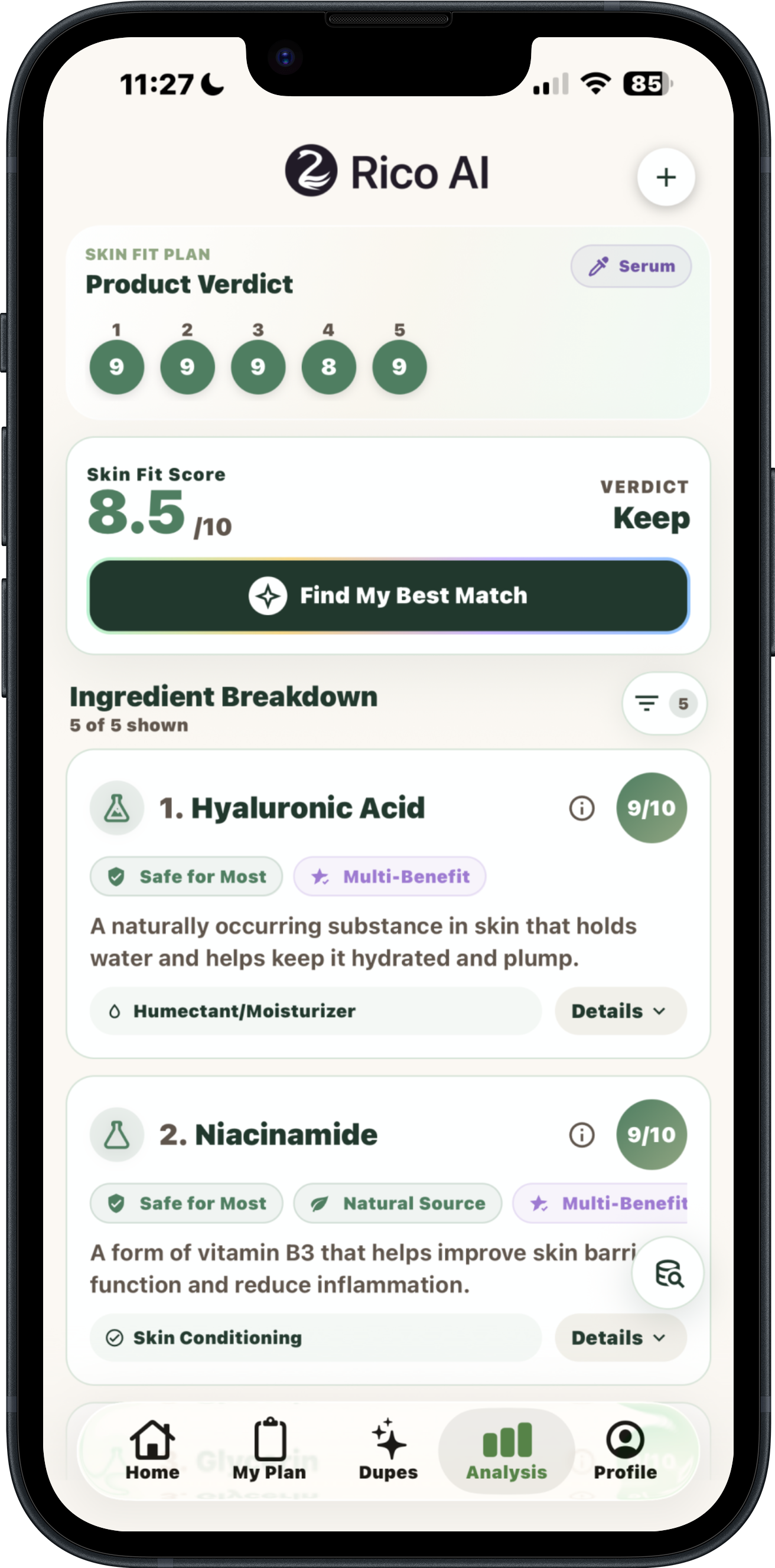
Free: Complete your first signed-in product check during onboarding and see Rico's plain-English Skin Fit result.
Sources and limits
These sources support the general guidance in this article. They cannot predict how one cosmetic will behave on your skin, and Rico does not diagnose or treat a skin condition.
- Lightsaver: Triplesome Serum SPF 40 — Tinted, US 40 ml. Exact formula and use directions checked October 14, 2026. Brand efficacy claims are not independent proof.
- American Academy of Dermatology: How to choose a sunscreen. Covers broad-spectrum SPF 30 or higher, water resistance, acne-prone label clues, and tinted sunscreen for darker skin tones; rechecked September 21, 2026.
- American Academy of Dermatology: How to test skin care products. Gives dermatologist-reviewed steps for testing one new skin-care product before wider use and what to do after a reaction; rechecked September 14, 2026.
- US Food and Drug Administration: Organic cosmetics: origin and safety. Ingredient origin does not determine safety; checked October 14, 2026.
A note from Zee, Rico AI founder
Skincare shopping gets loud fast. I built Rico to help you slow down, read the product in front of you, and choose one next step without turning every ingredient into a warning.
Quick answers
Is Lightsaver Triplesome Serum SPF 40 a good fit for acne-prone or sensitive skin?
It may suit someone who wants a tinted, glowy mineral sunscreen, but the full formula, shade and tolerance matter. Its label directs you to a water-resistant sunscreen for swimming or sweating.
Is this the same formula as Lightsaver SPF 33?
No formula substitution was made here. This article checks the US Triplesome Serum SPF 40 Tinted, 40 ml; use the official page and package for your exact variant.
Does fragrance-free mean it cannot irritate my skin?
No. Fragrance-free wording is one selection clue; it does not guarantee tolerance of every ingredient or the complete formula.
Will the zinc oxide stop me breaking out?
The presence of zinc oxide does not establish an acne benefit or guarantee that the sunscreen will suit you. Check the complete label and follow how your skin responds.
Can I use less if the tint looks too strong?
Do not reduce the labeled amount to make the shade work. Compare another shade or formula you can use as directed.
Built for a calmer product decision
Rico is your skin clarity coach for everyday skincare decisions: read or scan the label, understand the formula in plain language, and decide whether to buy, apply, compare, or skip. Rico gives educational Skin Fit guidance, not medical diagnosis or treatment.
Check one ingredient list free Get Rico for iPhone