Question: How do I check if a product has ingredients that may clog pores?
Pore-clogging check · Before checkout
Pore-clogging ingredients checker for acne-prone skin
Start with the full ingredient list, not the claim on the front. Acne-prone skin often needs help spotting rich oils, waxes, butters, heavy esters, fragrance patterns, and formulas that may feel too occlusive in a real routine.
Rico AI editorial: Reviewed against the sources below. Updated 2026-07-09.
Question people ask
How do I check if a product has ingredients that may clog pores?
Direct answer
Start with the full ingredient list, not the claim on the front. Acne-prone skin often needs help spotting rich oils, waxes, butters, heavy esters, fragrance patterns, and formulas that may feel too occlusive in a real routine.
Decision snapshot
What matters: The label says non-comedogenic. Your skin still needs the full formula checked.
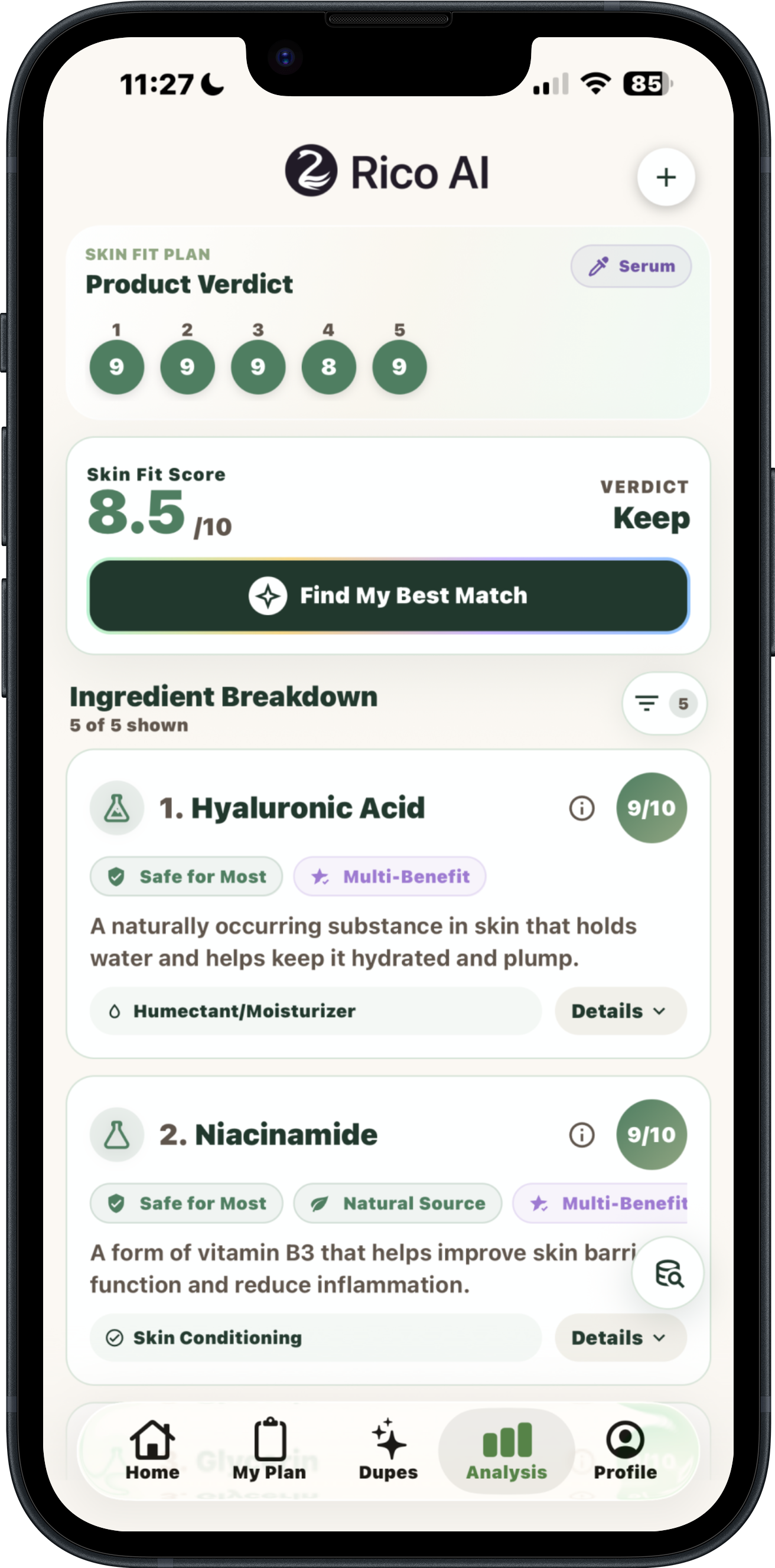
Next move: Scan the product in Rico before checkout. Rico reads the ingredient list against acne-prone Skin Fit signals and helps you decide whether to keep shopping or compare a lighter swap.
Best next guides
- Should I try PDRN skincare, or scan the label first?
- Will Anua Heartleaf Cleansing Oil break me out?
- Will TIRTIR Milk Skin Toner fit acne-prone or sensitive skin?
What usually happens
The label says non-comedogenic. Your skin still needs the full formula checked.
Rico move
Scan the product in Rico before checkout. Rico reads the ingredient list against acne-prone Skin Fit signals and helps you decide whether to keep shopping or compare a lighter swap.
Start with the full formula
Start with the full ingredient list, not the claim on the front. Acne-prone skin often needs help spotting rich oils, waxes, butters, heavy esters, fragrance patterns, and formulas that may feel too occlusive in a real routine. The front label can tell you what the product wants to promise, but the ingredient list shows what your skin actually has to handle. Use the formula to understand the product role, texture clues, active load, fragrance pattern, and whether it makes sense beside the products already in your routine.
Look for the pattern, not one scary ingredient
The label says non-comedogenic. Your skin still needs the full formula checked. One ingredient rarely tells the whole story. A product can look good in one app and still be too rich, too active, too fragranced, or too hard to layer for your skin. The better question is whether the full product fits the concern you are shopping for right now.
Choose one calm next move
Scan the product in Rico before checkout. Rico reads the ingredient list against acne-prone Skin Fit signals and helps you decide whether to keep shopping or compare a lighter swap. If the product does not look like a strong match, do not force it because the packaging, reviews, or trend made it feel urgent. Compare a product that does the same routine job with fewer fit concerns.
Use a better-fit swap when the formula feels off
Choose a similar routine role with a lighter texture, fewer congestion triggers, and a formula your skin can repeat calmly.
Better-fit swap path
Choose a similar routine role with a lighter texture, fewer congestion triggers, and a formula your skin can repeat calmly.
Turn this guide into one product decision
Free: Complete your first signed-in product check during onboarding and see Rico's plain-English Skin Fit result.
Sources and limits
These sources support the general guidance in this article. They cannot predict how one cosmetic will behave on your skin, and Rico does not diagnose or treat a skin condition.
- American Academy of Dermatology: Moisturizer and acne-prone skin. Explains why moisturizer can matter in acne routines and how to read acne-friendly label language.
- American Academy of Dermatology: Acne skin-care tips. Offers dermatologist-reviewed guidance on gentle routines, sunscreen, and avoiding irritation.
- U.S. Food and Drug Administration: Cosmetic ingredient declarations. Confirms that cosmetics generally require an ingredient declaration, with limited trade-secret exceptions.
- U.S. Food and Drug Administration: Cosmetics labeling claims. Explains the difference between cosmetic claims and claims that make a product a drug; rechecked September 14, 2026.
A note from Zee, Rico AI founder
Skincare shopping gets loud fast. I built Rico to help you slow down, read the product in front of you, and choose one next step without turning every ingredient into a warning.
Quick answers
How do I check if a product has ingredients that may clog pores?
Start with the full ingredient list, not the claim on the front. Acne-prone skin often needs help spotting rich oils, waxes, butters, heavy esters, fragrance patterns, and formulas that may feel too occlusive in a real routine.
What should I do before buying this product?
Scan the product in Rico before checkout. Rico reads the ingredient list against acne-prone Skin Fit signals and helps you decide whether to keep shopping or compare a lighter swap.
What if this product does not look like a good fit?
Choose a similar routine role with a lighter texture, fewer congestion triggers, and a formula your skin can repeat calmly.
Built for a calmer product decision
Rico is your skin clarity coach for everyday skincare decisions: read or scan the label, understand the formula in plain language, and decide whether to buy, apply, compare, or skip. Rico gives educational Skin Fit guidance, not medical diagnosis or treatment.
Check one ingredient list free Get Rico for iPhone